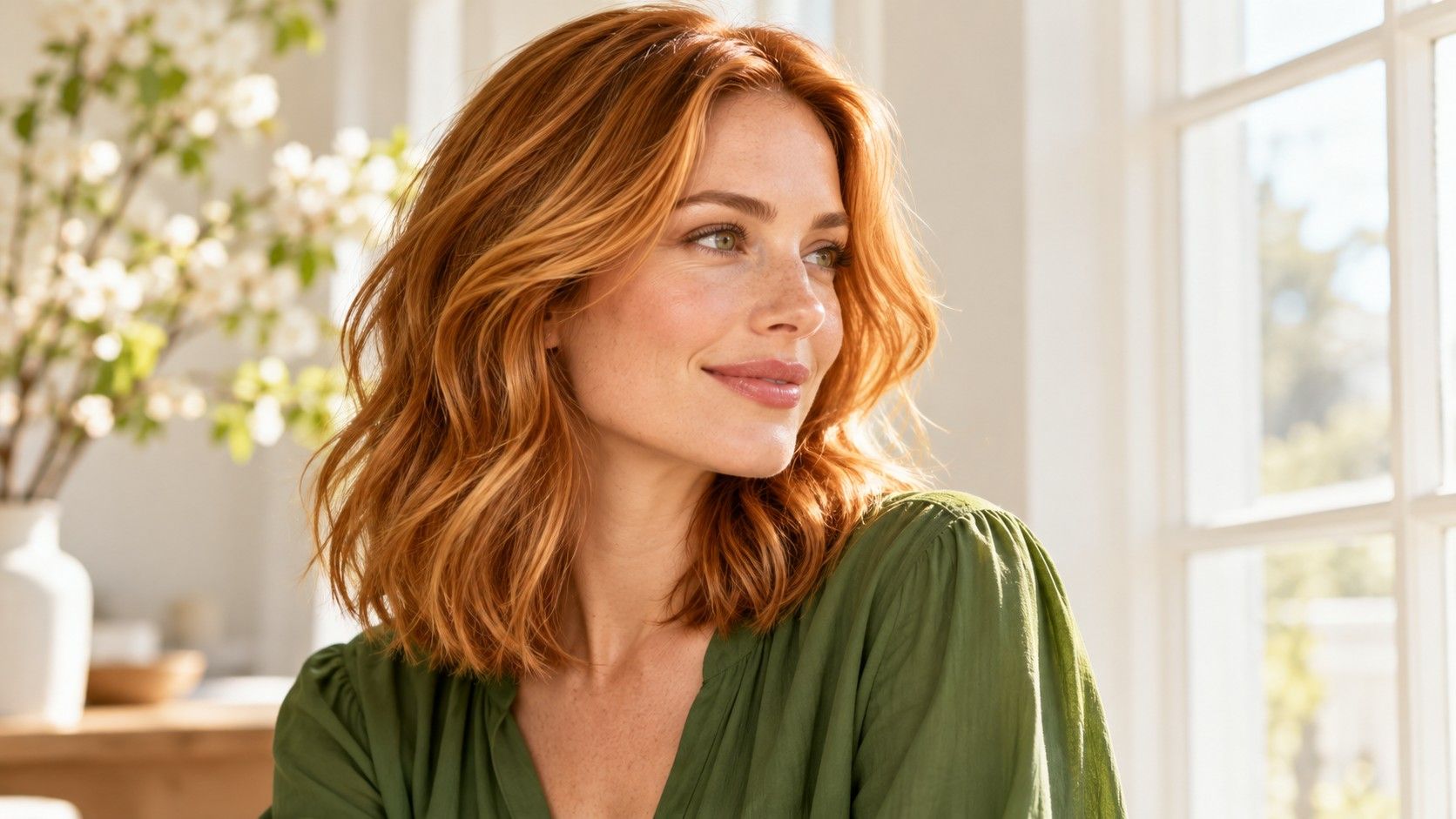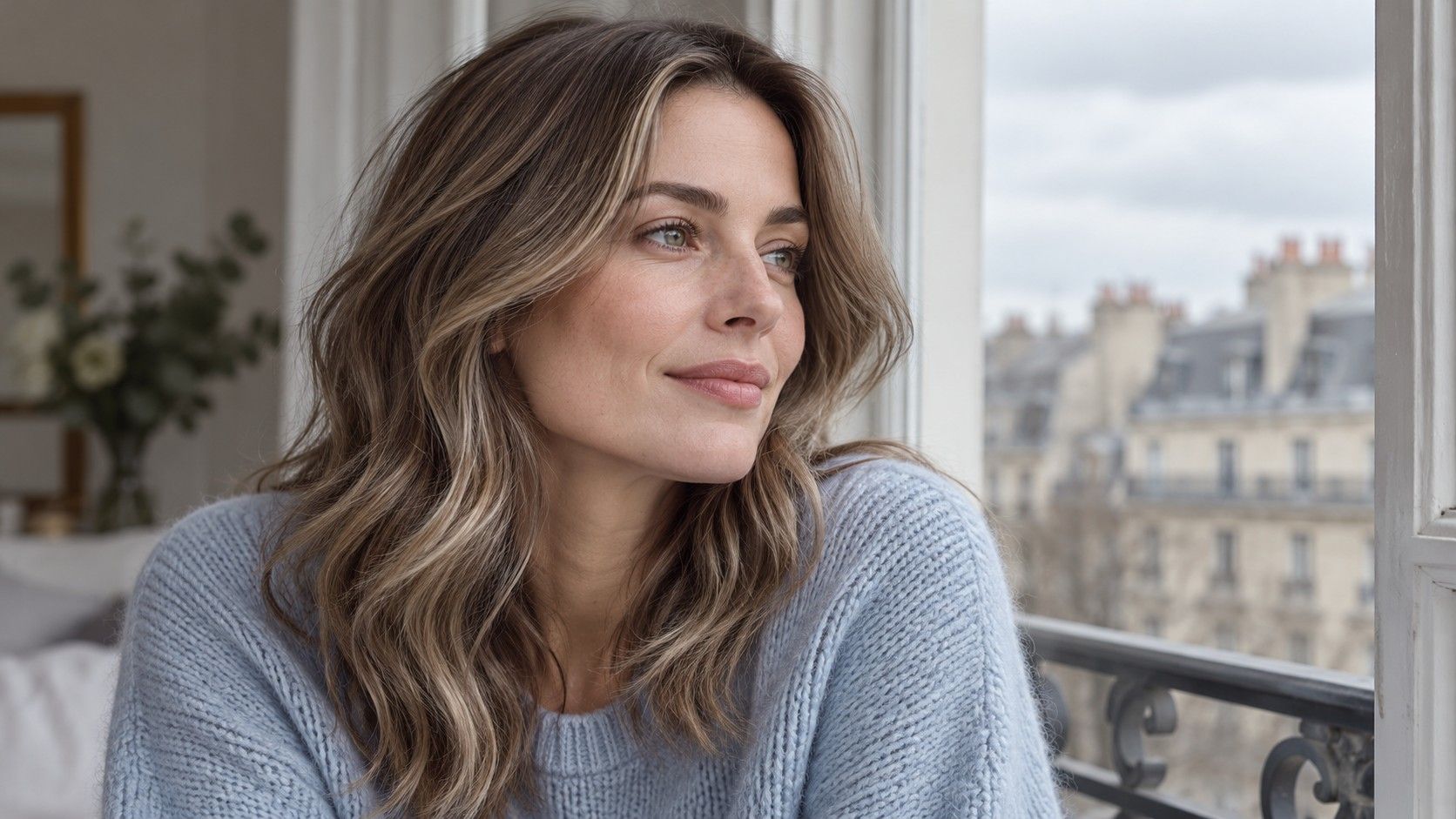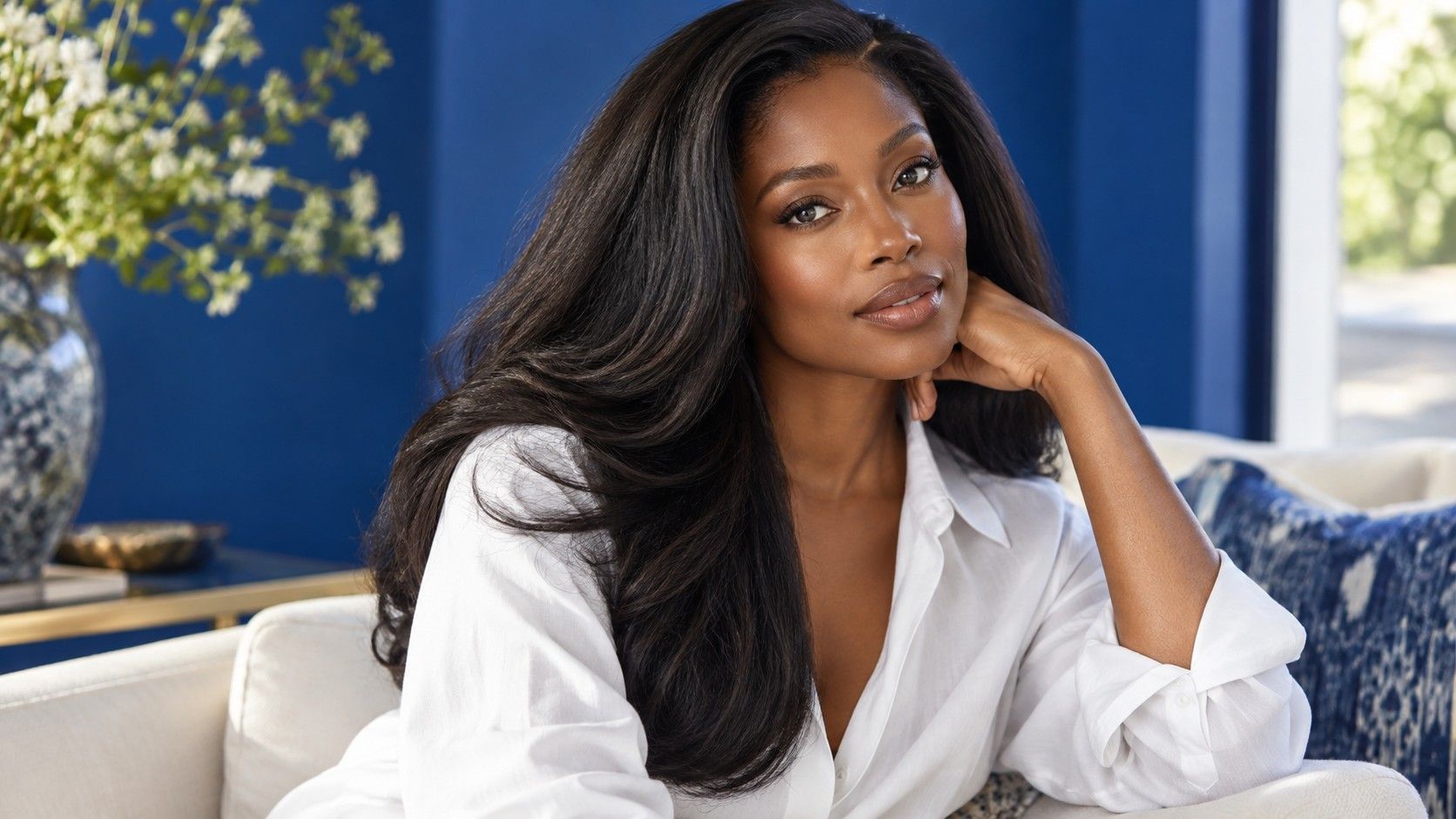
A True Winter label does not oblige you to dye your hair black. It can be a prompt to explore clear contrast and cooler-looking color, but your starting depth and your own preferences still matter. Before choosing between espresso brown, black and a lighter alternative, look at how much contrast you already have and where you want it to change. The decision becomes easier when darkness is one adjustable feature rather than a rule to satisfy.
Find the depth you are starting from
Begin at the roots if you can see natural regrowth. Compare that area with the lengths in indirect daylight. Previously lightened ends or a warmer dyed section may make the whole head look lighter than the natural base. Describe the separate areas: deep brown roots, medium-brown mids, lighter ends, for example. This gives you a clearer starting point than choosing one shade name for everything.
If your hair is fully colored, an older unfiltered photograph may help you remember the natural depth. Indoor light, exposure and the age of the image can change its appearance.
Depth is the apparent lightness or darkness of hair. Tone is its color character, such as golden, copper, ash or neutral. You can prefer your current depth while wanting a different tone. You can also enjoy a deeper frame without wanting an especially ash finish. Separating those decisions prevents a request for “more Winter” from becoming a larger transformation than you intended.
Ask what you are trying to improve before searching for true Winter hair colors. Are the ends too bright beside the root? Do you miss a dark outline near your face? Do you simply want to explore a new look? Each question points toward a different comparison.
Put espresso and black beside the same face
Espresso is a useful search term for deep brown references, though names vary between images and color ranges. Look for the visible effect: brown dimension in even light, dark shadow underneath and a clear outline near the face. Black may create a denser frame with less visible brown. Compare images that show these differences clearly instead of relying on the labels.
Use one ordinary photo of yourself for the comparison. Keep your face, background and exposure unchanged while testing a deep brown and a black option. A filter that brightens the face when it darkens the hair will exaggerate the result. Return to the original after each preview and check that the apparent improvement comes from the hair itself.
Consider the relationship with your brows and eyes without trying to match every feature. A natural dark brow can remain a strong feature with slightly lighter hair. Light eyes do not require a particular depth. Look at the whole arrangement and decide how much attention you want the hair outline to draw.
If black seems overwhelming, try deep brown before abandoning the darker direction. If both feel too heavy, compare a shade closer to your present depth. The best hair color for True Winter preferences is not determined by how far you move toward the darkest sample. It should also work with the amount of contrast you enjoy seeing in the mirror.
Keep dimension without turning the whole head lighter
Dark hair can show a range of values through movement, light and placement. Choosing depth does not require a perfectly flat result. When reviewing references, inspect whether the attractive part is the dark base, the lighter strands or the contrast between the two. That observation helps explain why one dark style looks appealing and another looks too solid.
Distinguish existing shine from added color. A bright ribbon across smooth hair may be a reflection from a window, rather than a lightened section. Look for another photograph of the same style or a similar reference in softer light. If the dimension disappears entirely when the lighting changes, the picture may not show a placement that a colorist can reproduce.
For intentional lighter pieces, consider how much of the dark base remains visible. Fine pieces through the lengths create a different balance from a broad pale panel beside the face. Show the root area as well as the ends in your reference. Otherwise a colorist may see the desired brightness without seeing how much depth you wanted to retain.
Cooler-looking dimension is a direction to discuss, not a promise that every strand will look identical under every light. Natural variation and reflections remain part of the appearance. If you dislike an obvious red or gold effect, identify that boundary in a reference rather than asking for hair with no reflection at all. Bring your dye history so the discussion starts with the hair you have.
Test blonde without treating the label as a ban
Searching for true Winter blonde hair can produce conflicting advice because a seasonal label compresses several appearance choices into one phrase. You can explore blonde without needing the label's permission. The more useful question is what happens to the contrast around your face when a large dark area becomes light.
Compare a lighter result that retains a deeper root with a more uniform blonde. Also compare a darker blonde or softer light brown if those are close to what interests you. The palest option may not be the most appealing, and the warmest and coolest options may feel quite different at the same depth. Keep each comparison narrow enough to explain what you prefer.
If you miss the darker frame, investigate placement before rejecting brightness altogether. Lighter lengths with more depth at the root may give you a different balance from pale color right against the forehead. An inspiration photo should show the front and the root area clearly. A rear view of blonde waves cannot answer what the result will do beside your face.
A light preview cannot show how previous dye or uneven starting color affects the salon work. It cannot tell you whether the reference can be reached in one visit. Ask a colorist about realistic stages, limitations and maintenance for your hair.
Read the photo before believing the color
Dark hair in a shadowed photograph can lose all visible detail. The same depth beside a bright window may reveal plenty of brown. When comparing True Winter hair color references, seek enough light to distinguish hair from a dark background. A nearly black silhouette offers little information about the tone or dimension within it.
Exposure affects the face as well. A brightened complexion can make the hair-to-skin contrast look much stronger, while warm indoor light can change both at once. Look for a reference where the face and hair are evenly lit, without an obvious beauty filter.
Make your own comparison in indirect daylight with the hair loose in its usual shape. Save the original and avoid changing makeup, crop or screen brightness between options. A cropped swatch cannot reproduce the quantity of hair near your cheeks. View the full head at a normal size, then zoom in only to check missed edges or painted skin in a virtual preview.
Check your favorite on a second photo before treating it as a final answer. If it succeeds only at one exposure, take that uncertainty to the consultation. “Deep brown with visible dimension” travels more reliably than a screenshot and the instruction “exactly this.”
Choose the smallest change that answers your question
When you are unsure how dark to go, identify the smallest useful experiment in appearance. If you dislike warm ends but like the depth at your face, compare a similar-depth finish with a different tone. If you want stronger contrast, compare a modestly deeper option before black. If you want brightness, compare selected placement before a whole-head transformation.
This is a way to make a clearer decision, not a promise that every small-looking change is simple to achieve. The work still depends on previous dye, the condition of your hair and the chosen result. Ask what changing back would involve before committing to a deep new color. A dramatic dark filter disappears with a tap; a real color decision deserves a longer view.
Bring three labeled options: closest to your current depth, somewhat darker or lighter, and the ambitious version. Explain what appeals to you in each, along with a photograph that is too dark or too pale for your taste. Tell the colorist how you feel about visible regrowth and how much upkeep you are willing to arrange. Ask for estimates based on that discussion.
If you use home color, follow the product's directions and required safety instructions. Do not translate a seasonal palette into mixing or processing decisions. Keep the final request concrete: a depth range, a preferred tone, the amount of contrast around the face and any lighter placement. Those choices are more useful than trying to prove that a True Winter must have one particular hair color.