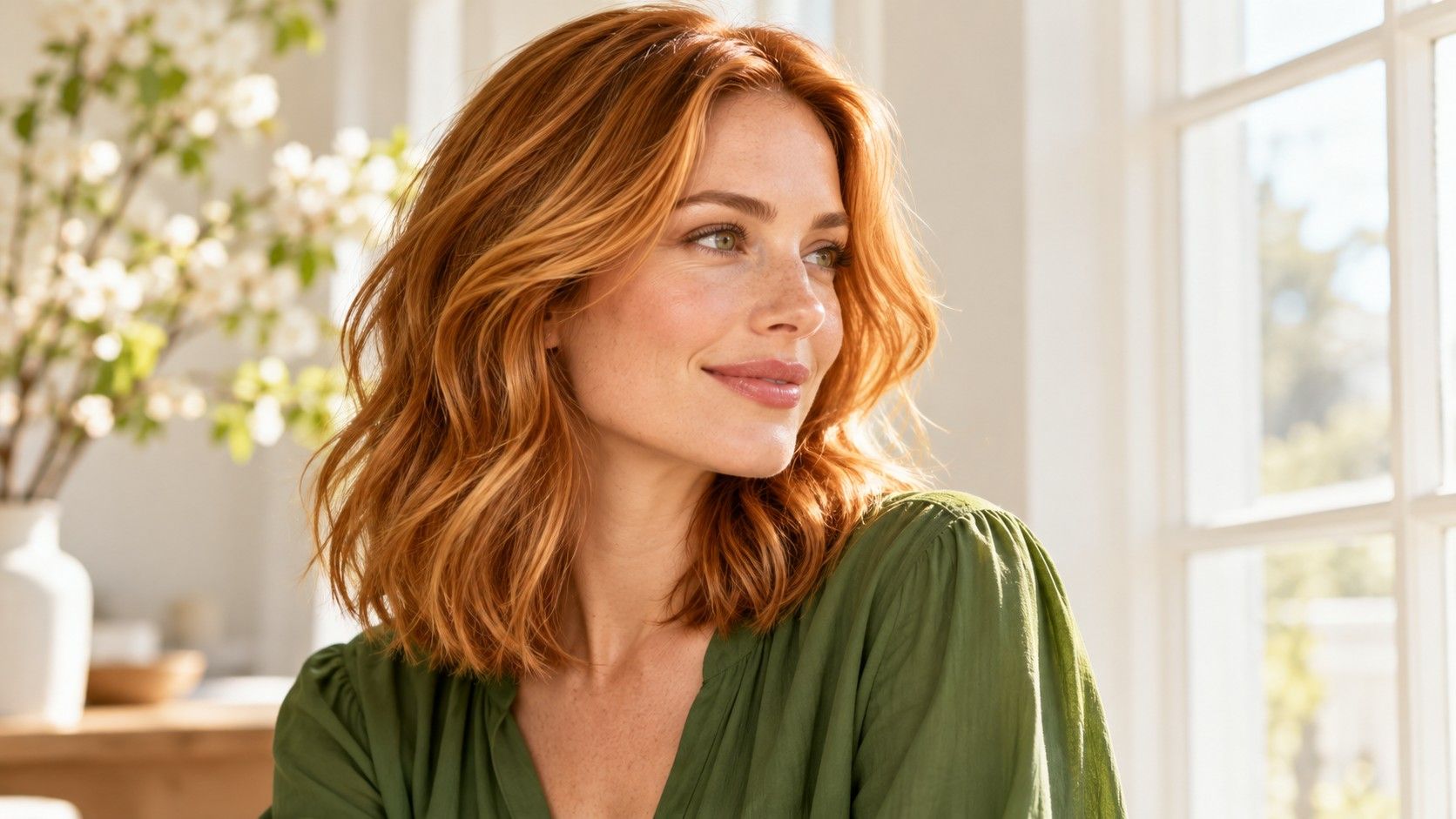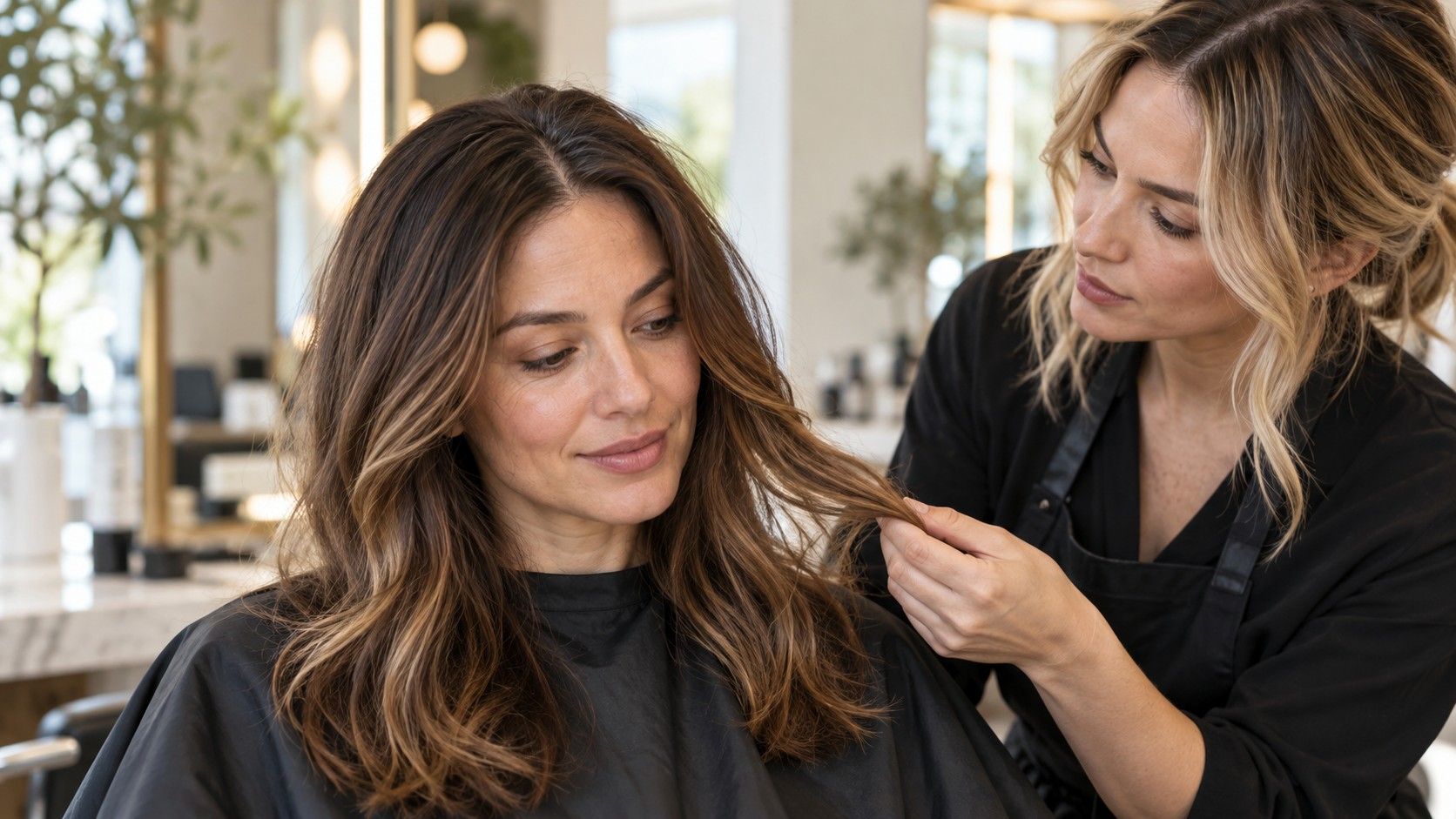
Cool Winter hair colors offer a direction to explore: cooler-looking tones and a clear relationship between hair and face. They do not give everyone with that label the same ideal shade. The useful question is whether you want less visible warmth, more depth or a different placement of brightness. Separate those choices before collecting references, and you can explain the result you want without relying on a seasonal name to do all the work.
Check whether you want cooler tone or a darker frame
Begin with the hair you have in ordinary daylight. Look at the roots, the lengths and any lighter pieces separately. Your natural root color may be deeper or less warm than the rest, especially when the lengths have been colored. Record that difference rather than averaging the whole head into one shade. A request to make warm ends feel closer to the root is different from a request to darken everything.
Depth describes how light or dark hair appears. Tone describes its color character. A cool medium brown can stay visibly brown, while a warmer deep brown can appear nearly black in shadow. If your complaint is that the ends look too orange, adding darkness is not automatically the change you wanted. Compare a cooler version at a similar depth first.
Then consider the contrast you already have between hair, skin, brows and eyes. Do you enjoy that arrangement, or are you seeking a stronger frame? A Cool Winter label should not push you toward a high-contrast result that feels uncomfortable with the way you dress and wear makeup.
For an initial test, save your current photo beside one cooler option and one deeper option. Keep the lighting, crop and face unchanged. Write down which difference actually appeals to you. “Less warmth in the lengths” gives a colorist a much clearer starting point than “make me look more Winter.”
Compare cool brown with near-black at equal exposure
Cool brown is a useful place to begin when you want a crisp effect while retaining visible brown dimension. Compare a neutral brown with a more ash-looking brown at the same apparent depth. Neutral may give you enough relief from obvious gold or copper. More ash is a separate preference, not an upgrade that everyone needs.
Shade names such as espresso, ash chocolate and cool brunette can describe different things in different galleries. Look at what is present in the photograph. Can you see brown through the mids? Is the effect mainly a dark base with a cool reflection? Is the face brightened so much that the hair looks darker by comparison? Choose references for those visible qualities rather than for the name alone.
Near-black and black create a stronger frame when the surrounding face is much lighter. That may be the effect you want, but test it separately from tone. If the black preview feels severe, return to a deep brown before deciding that cool color itself is wrong for you.
Blue-black is another distinct direction. A noticeable blue reflection can be part of a deliberate fashion look; it is not a requirement for cool hair. Compare an image where the reflection is visible with one where the hair reads as a natural-looking deep shade. Decide whether you want that color character in ordinary light, rather than choosing it only because the word “cool” appears in the description.
Keep shine separate from warmth
Shiny hair reflects its surroundings. A warm lamp can create a gold-looking band across a dark style, while blue sky near a window can add a cooler reflection. Neither observation alone proves the underlying color. When looking at reference photos, inspect both the bright reflective areas and the more evenly lit sections.
This matters when you ask for a cool Winter hair color with “no warmth.” If you mean no obvious copper through the lengths, say so. If you want the hair to look identical under every light, a single reference cannot promise that.
Photo exposure creates another trap. An overbright face beside dense dark hair can exaggerate contrast. An underexposed picture can hide all the brown dimension and make an ordinary brunette look black. Avoid judging from a tiny cropped image with no visible skin or background. A larger, plainly lit photograph gives you more clues about what the color is doing.
Your own comparison photo should be equally straightforward. Use indirect daylight and turn off beauty filters. Keep an untouched original beside each edit. If a preview changes your complexion or smooths away shadows, its apparent harmony may come from that editing rather than the shade you selected.
Try blonde as placement before changing the whole head
Blonde changes both the brightness and the amount of light color around the face. For a reader exploring hair colours for Cool Winter, the first decision is often how much brightness to introduce. Fine pieces through a dark base, broad face-framing sections and an all-over blonde are different visual arrangements even when their lightest strands have a similar tone.
Start by comparing a retained dark root with a lighter face frame. Then compare a more extensive light result. Notice whether you miss the original dark outline near the forehead and cheeks. If you prefer some contrast left in place, save a reference that actually shows it. A photo of a uniformly pale head will not communicate a preference for a deeper base.
Cool-looking blonde does not have to mean the palest possible blonde. Compare a darker neutral or cooler blonde with a much lighter option before choosing. One may give the tone you want while changing the overall contrast less. Use the words “lighter,” “cooler” and “more around the face” separately so the request remains clear.
A simulated blonde is only an illustration. It can paint brightness onto dark hair without showing the salon work needed to create it, and it may remove all the natural variation. Show your previous dye history alongside the image. Ask a colorist what part of the direction is realistic and whether a more selective placement could capture the feature you like.
Decide how cool you want the color to stay
Before committing to a particular finish, ask how it is likely to look between appointments on your hair. A freshly photographed shade is one point in time. If you strongly dislike the appearance of warmth returning, make that a central part of the consultation. Discuss the upkeep you are willing to do and the changes you would find acceptable.
Existing color affects that discussion. Bring a simple history of permanent color, lightening and any other color services you remember, with approximate dates. A photo of the present result cannot supply those details. Do not assume that a desired cooler finish calls for one particular product or procedure; that decision needs the actual starting hair and the product directions.
Be specific about your routine. If visible roots bother you quickly, show where the contrast would be unwelcome. If you are comfortable with a deeper root but dislike yellow-looking lengths, explain that distinction. Two people may choose the same inspiration picture and still need different plans because they prioritize different parts of it.
Ask for an estimate of the initial work and the likely maintenance pattern. There is no universal appointment interval that follows from a seasonal type. If the maintenance sounds unrealistic, revisit a closer-to-current version of the idea.
Build a color request that survives the screen
Choose three references with a common direction: a preferred cool brown, a deeper alternative and a lighter placement if you are considering one. Add your ordinary daylight photo and label what matters in each reference. “Visible brown rather than black,” “no obvious red through the ends” and “brightness stays away from the root” are all useful observations.
Include a rejected picture if it marks a clear boundary. Perhaps it looks too gray, too dark or too icy for your taste. This stops “cooler” from being interpreted as “as ash as possible.” A colorist can use the difference between your preferred and rejected examples to understand the amount of tonal change you want.
If two virtual previews disagree, keep that uncertainty in the notes. The best hair colors for Cool Winter are not established by whichever filter produces the most flattering screen. Ask to compare physical shade references and discuss how they relate to your current depth, existing color and intended finish.
For home color, follow the chosen product's directions and required safety instructions. Seasonal advice and screen previews cannot provide a formula or processing plan. Your final choice should be something you can describe in everyday terms: how dark it looks, how much warmth you want to see and where the lightest pieces belong.