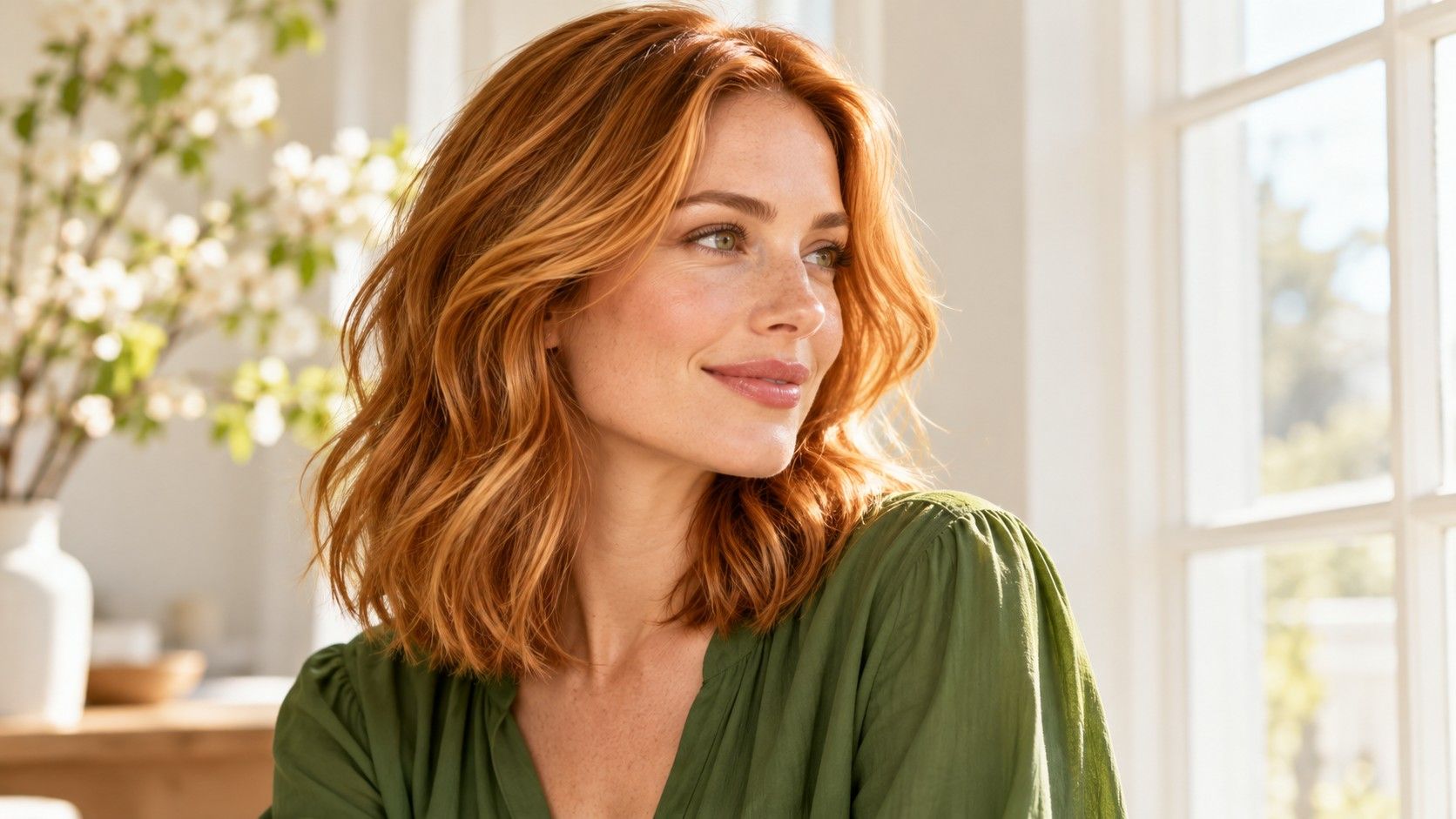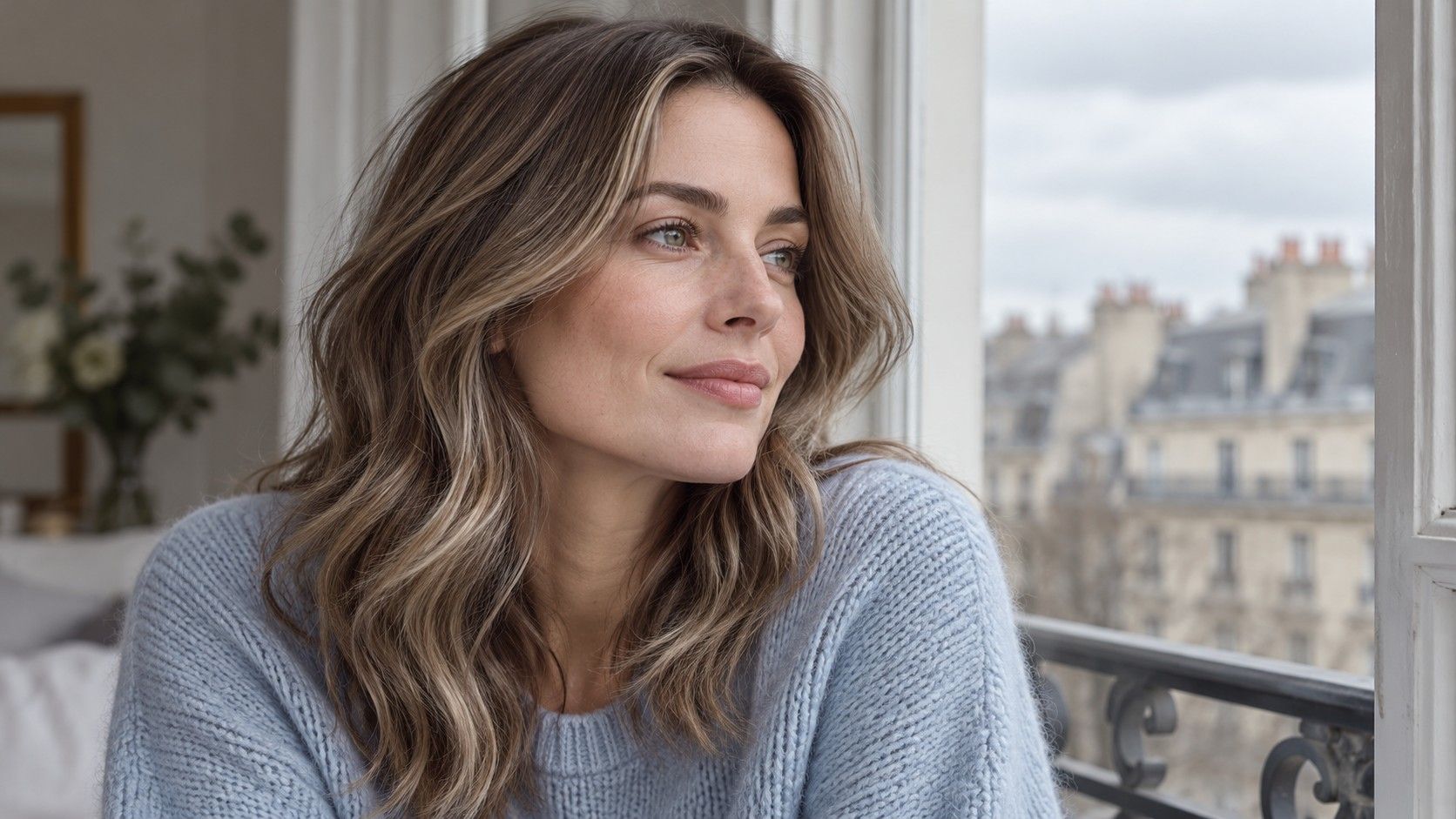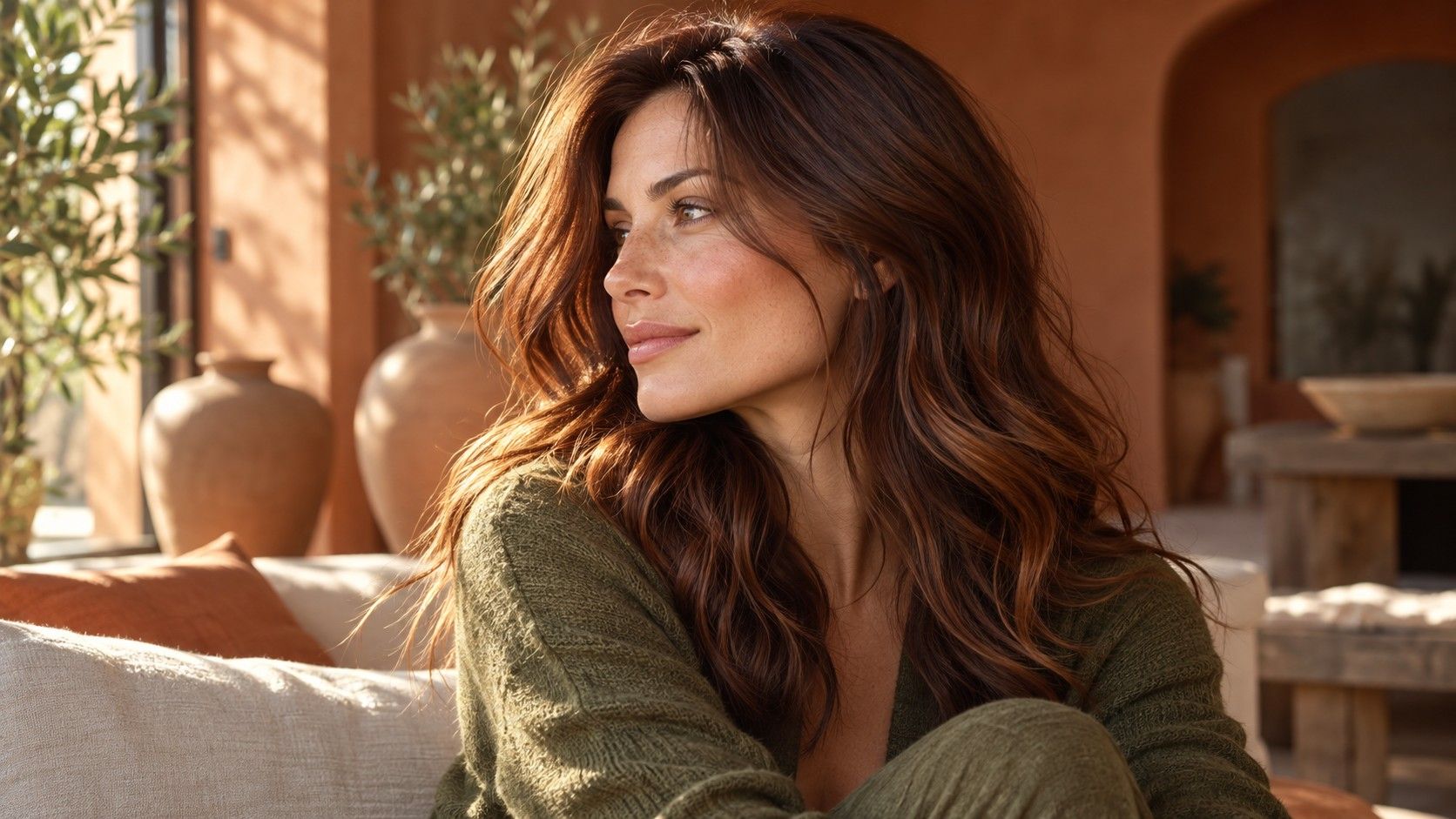
Chestnut, copper, caramel and warm brown all appear in lists of True Autumn hair colors. The names suggest an inviting direction, but they hide substantial differences in depth and intensity. A dark chestnut can give a firm outline around the face; a caramel brown can feel much lighter; a rich copper can make color the main event. Use the seasonal palette as a styling reference while comparing those effects. You do not have to choose the darkest or reddest option to explore autumn warmth.
Choose the kind of warmth before adding depth
True Autumn is commonly described in seasonal styling as warm and rich, often with a softer impression than a very clear spring palette. That language describes an aesthetic rather than a scientific diagnosis. It can help you collect references, but it does not establish a rule about what your complexion is allowed to wear. Start by deciding whether you prefer a golden, red brown or copper direction.
Compare those directions at a similar depth. A chestnut brown beside a deep copper brown is more informative than a chestnut beside an extremely light strawberry blonde. Once you have a preferred warmth, try a lighter or deeper version. Otherwise the drama of darkness can be mistaken for the appeal of a particular tone, and you may end up with more color than you intended.
Include a current photograph in the comparison. If you like most of your existing brown but want it to feel less cool, the useful change may be modest. If you want a distinct copper identity, a quiet golden highlight reference may disappoint you. Write down what you want to see in an indoor mirror, where a warm reflection can be less obvious than it appears in a sunlit photograph.
Use chestnut and caramel to compare two different effects
Chestnut is often used for brown with a warm reddish impression, while caramel usually suggests golden brown or warm lighter pieces. Neither name has a single reliable meaning across salons and photographs. A reference labelled caramel might show a brunette with a few highlights or an overall light brown result. Look at how much of the hair remains close to the root depth before saving it.
If you prefer a rich brunette, compare a chestnut with fine tonal variation against a more evenly colored version. The first can let light move through the hair without making it much paler overall. The second may look polished and deliberate, but can form a stronger block around the face. Choose based on the effect you like rather than assuming richness requires a solid application of dark color.
Caramel highlights can introduce warmth and brightness while leaving brown as the main color. Placement changes the result considerably. Fine pieces through the length create a different impression from broad bright sections beside the cheeks. View the reference straight on as well as from behind; a beautiful back view can conceal a face frame you would find too strong. Ask the colorist to show how the chosen placement would relate to your haircut.
Compare a brown based copper with a vivid copper
Warm red hair can be the most tempting part of a True Autumn hair color palette. Separate the idea of copper from its intensity. A brown based copper may remain close to brunette indoors, revealing more warmth in daylight. A brighter copper announces itself more clearly. A deep auburn can look rich but also make the overall hair appear darker than either one.
Place all three directions beside your face using a consistent photograph. Look at the whole portrait first. Does the copper feel like an enjoyable focus, or do you keep wishing it were quieter? If you like the warmth but not its intensity, try a more brown based version before discarding red altogether. If the auburn looks too heavy, compare a lighter copper brown rather than changing both warmth and depth at once.
The starting hair matters here. Previously colored dark lengths and pale lightened ends cannot be treated as equivalent to untreated brown hair. A colorist needs the history and a close look at the current result to discuss an appropriate approach. Take the reference as a description of what you like, then ask what version is realistic. A virtual color can hide unevenness that would need attention in an actual salon plan.
Keep lighter options in the conversation
A warm palette does not oblige you to become brunette. Honey beige, darker golden blonde and softly copper toned blonde can be useful comparisons if you enjoy a lighter overall look. Judge them as pictures rather than fixed seasonal rules. You may prefer a neutral beige with a warm accent over an all over golden impression, or choose more warmth because you like how it looks with your usual clothes.
For blonde references, examine the root transition and the brightness immediately beside the face. A deeper root with warm lighter lengths differs from a uniformly pale shade even when both photographs are called honey blonde. If your priority is retaining depth, ask for examples where the hairline is visible. Backlit curls make it hard to see the part of the color that will frame your face most often.
Choose photographs with a similar texture to yours. Waves can make golden sections look dispersed; straight hair can reveal clearer bands of lighter and darker color. That does not make either texture better for a shade. It changes how you read the design. Include a simple, minimally styled reference alongside the polished salon image so the everyday version is part of the decision.
Notice when richness has become more darkness than you want
One common source of disappointment is asking for a rich warm brown and discovering that the main visible change is darkness. Richness can come from variation and a warm color impression as well as from depth. If the saved reference looks almost black away from the window, decide whether you would still like it under indoor lighting. A daytime glow will not be visible all the time.
Try two warm browns a little apart in depth using the same photograph. Keep your normal brows and makeup visible. If the deeper option feels too severe, that is a preference to record, rather than evidence that your seasonal category is wrong. A lighter chestnut or brown with a few caramel pieces may preserve the warmth you wanted while easing the outline around your face.
Check the comparison beside familiar olive, cream, rust or other clothes you actually own. These are useful props if you wear them, not compulsory autumn colors. The hair and clothing together may create more warmth than you enjoy, or they may make the look feel coherent. Also use a plain neutral top so you can judge the hair without a strongly coordinated outfit doing all the work.
Be careful with automatic camera changes. A darker hair overlay can prompt an app to brighten the face, making the edit seem more flattering for reasons unrelated to hair color. Compare the original skin and facial details with the edited version. If those shift, use the image to discuss the shade direction, while avoiding conclusions about a perfect undertone match.
Build a request around your hair and your routine
Reduce the shortlist to a main choice and an alternative with a clear difference. A medium chestnut and a caramel highlighted brown give you a useful choice between richer color and more lightness. Two almost identical auburn photographs are less helpful unless you can explain the distinction you see. Add one unwanted effect, such as very dark ends or strong orange pieces at the front.
Bring your color history and state what maintenance you are willing to accept. A natural root transition, a consistent overall shade and a clearly copper effect involve different priorities. Ask how the proposed result is likely to change between visits and what the grow out will look like. The answer should be tied to your starting hair and the work planned, rather than a standard timetable attached to every warm shade.
If a major change seems impractical, ask which element can be kept in a gentler version. Perhaps the warmth matters more than the lightness, or the caramel placement matters more than the exact background brown. Separating those features makes a staged discussion more productive. It also lets you choose a less dramatic result without losing the reason you liked the original photograph.
The best hair color for True Autumn is ultimately a personal choice within a broad family of ideas. A useful final request might be a medium warm chestnut with quiet dimension and no very dark perimeter. Another person may choose bold copper or lighter honey brown. What matters is that you can describe the depth, warmth and contrast you enjoy, and understand what maintaining that result will ask of you.