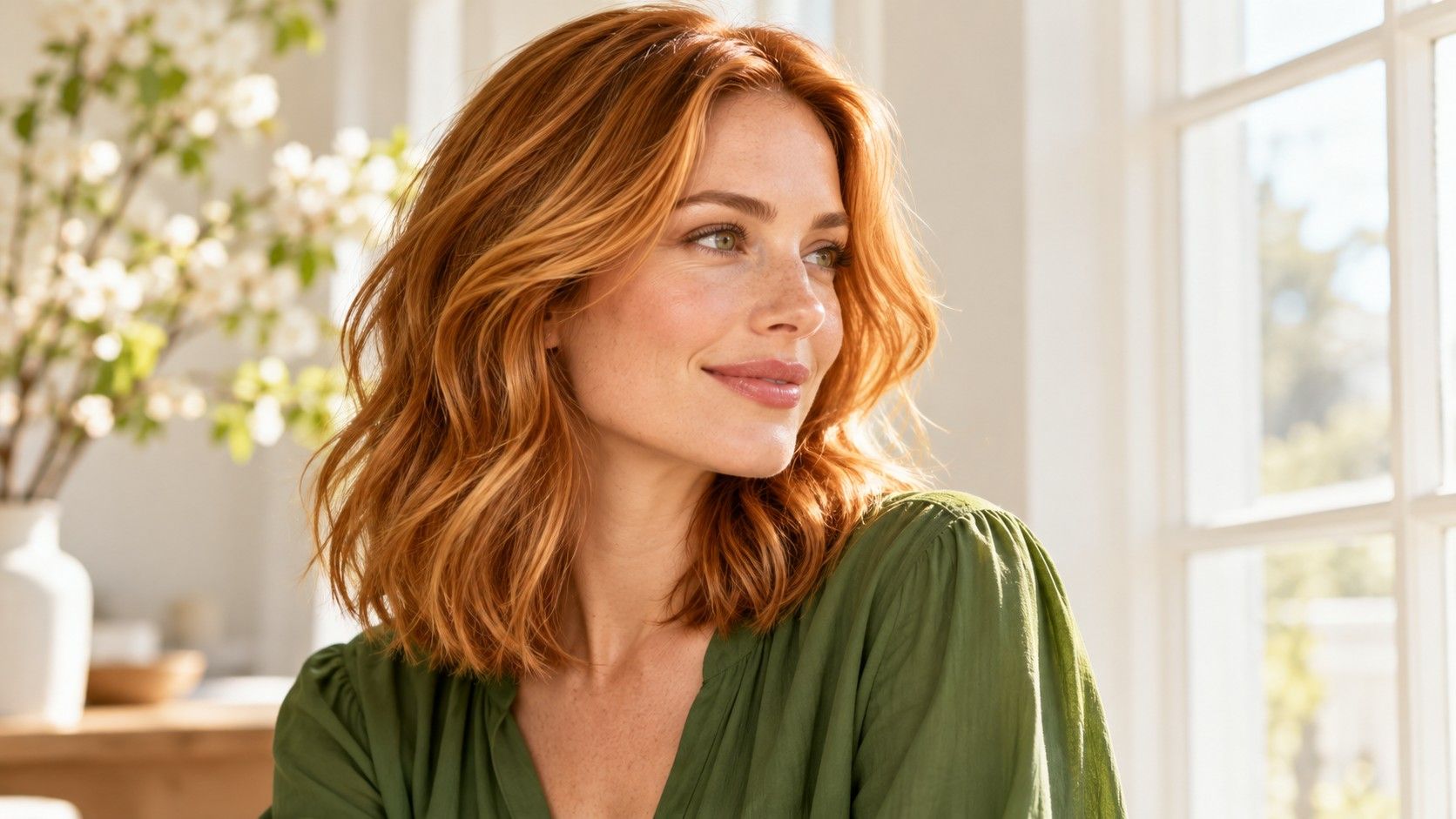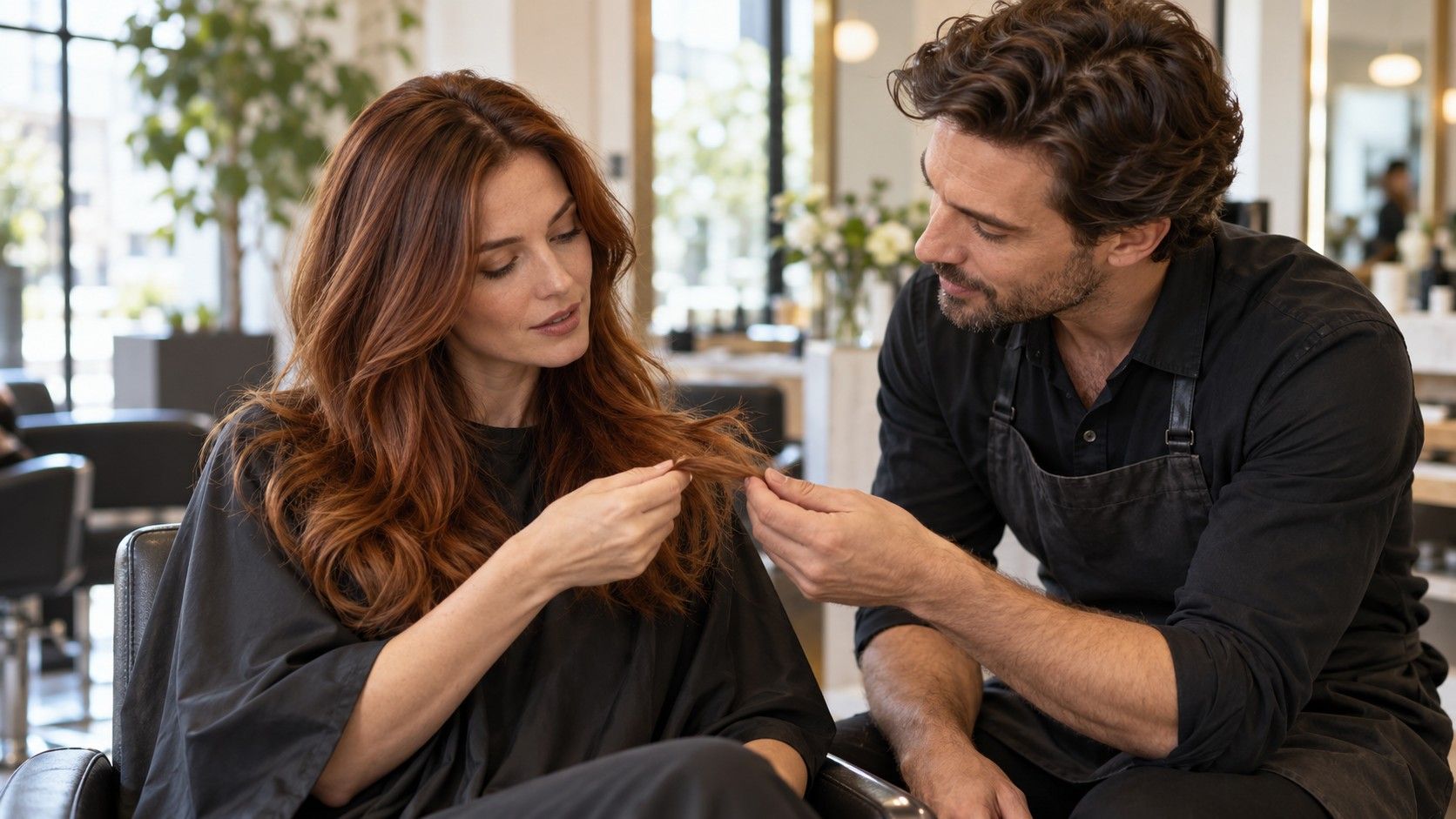
You have found a virtual shade you like. The next step is working out which parts of that image you want to carry into real life: the depth, the warmth, the bright pieces around your face or the overall effect. A hair dye try-on can help you explain that goal, but it cannot inspect your hair or decide how to reach it. Bring the preview into a conversation with a colorist as a reference, alongside your color history and practical limits. A useful salon plan connects all three.
Describe what you like before naming the shade
Begin with the edited image and write one sentence about the change that attracted you. “The hair looks lighter around my face but stays dark at the root” is more precise than “I want caramel.” Another useful description might be, “I like this depth, but the red is stronger than I want.” You are separating the features you want to keep from details the software added by accident.
Break the appearance into three parts: depth, tone and placement. Depth is how light or dark it looks. Tone is the color direction, such as golden, coppery, muted or neutral. Placement describes where you see the differences: a deeper root, lighter lengths, a bright fringe or an all-over color. A favorite preview may succeed because of one of these parts while the other two need adjusting.
Include what you do not want. If “blonde” means soft brightness to you rather than very pale ends, say that. If you enjoy copper but dislike an orange impression, show the distinction in two references. These preferences give the colorist room to propose an interpretation. A preset name from a hair dye simulator does not have the precision of a shared visual example, and it may mean something different in another app or salon color range.
Bring a starting point that includes the roots and the history
Your current color is more than its overall appearance in a selfie. Look separately at the root, the middle and the ends. Note whether the root is natural regrowth, whether the lengths have old highlights, and whether any areas look darker or warmer than the rest. A uniform digital overlay can conceal these differences, but they belong in the practical discussion.
Write down previous color work you remember, with approximate dates. Include salon color, at-home dye and any other color products you have used. If you know a product name, bring it; if you do not, say so. “Dark box dye last winter, then salon highlights in spring” is more useful than assuming everything has disappeared because the visible shade has faded. Do not fill gaps with guesses to make the history sound complete.
A current photograph in ordinary daylight can support that record, particularly if your hair has changed since you saved the preview. Bring your hair in its normal state to the appointment as the salon requests, and let the colorist assess it directly. The purpose of the history is to establish a realistic starting point. It does not mean you need to arrive with a technical explanation of what should be done next.
Separate an attractive overlay from an achievable result
A hair dye filter can turn dark hair pale in a moment because it changes the picture. It does not demonstrate that a real color product can create the same change in the same way. Digital lightness may erase shadows, make the ends look opaque or give every strand identical brightness. Even a visually convincing preview cannot establish the condition of your hair or predict a final result.
The same limitation applies to smaller shifts. A muted brown edit might blend with your original pixels in a way that looks dimensional, while its preset label suggests a single all-over shade. A red preview may add shine that accounts for much of its appeal. Ask which part of the appearance is coming from color and which part comes from lighting, texture or the software's finish.
Use the consultation to ask, “Which elements of this image are realistic from my starting hair?” You may hear that the general depth is plausible but the tone needs adjustment, or that the desired placement is a better reference than the exact shade. Request an explanation in ordinary terms. You do not need formulas or processing instructions to decide whether the proposed result matches your aim.
If a colorist suggests a different reference, compare it against your original reason for liking the preview. Does it retain the soft root or the brighter face frame? Does it change the level of contrast? That keeps the conversation connected to your preference instead of letting a practical compromise drift into an unrelated look.
Agree on what the first appointment is meant to achieve
A dramatic reference and an achievable first result may be different pictures. Ask whether the proposed change is planned for one appointment or for several stages, and what the first stage would look like. There is no universal number of sessions for a particular shade. Your starting color, previous work and the assessment of your actual hair affect what a colorist can reasonably propose.
If several visits are suggested, ask about the appearance between them. You may be comfortable wearing a warmer or deeper version while working toward the final direction; you may prefer a smaller finished change that you can enjoy immediately. Either is a valid preference. An intermediate appearance should be something you understand in advance, especially if the preview you brought is very cool, very pale or unusually uniform.
Discuss dates before fixing the plan. If you have an event in three weeks or will be away for several months, make that part of the decision. Ask how much time to allow for the appointment, whether a separate consultation is needed and when the result could be reviewed. Seek an estimate of the services and cost for your hair rather than assuming the virtual shade corresponds to one standard booking.
It helps to distinguish your essential aim from flexible details. “I want less orange around my face” may matter more than achieving the palest possible ends. “I need a finished look before travelling” may matter more than reaching a particular preset. Agreeing on those priorities gives you a clearer first result to evaluate.
Decide what maintenance you will accept between visits
Ask how the proposed color relates to your natural regrowth. A pale all-over result on dark roots creates a different visible transition from a design that retains a deeper root. That does not automatically make one high maintenance and the other effortless. The question is how each will look as it grows and how much contrast you are comfortable seeing.
Talk about tone as well as roots. A shade can remain at a similar depth while looking warmer, cooler or less vivid over time. Ask what changes are reasonable to expect from the particular plan and what kind of follow-up the salon recommends. Avoid borrowing another person's appointment schedule; their starting color, placement and expectations may differ from yours.
| What matters to you | A question to ask before booking |
|---|---|
| A comfortable visible root | How will my natural regrowth relate to this design? |
| Keeping a particular tonal impression | How might this shade change, and what follow-up would it involve? |
| A fixed budget | What is included in the estimate, and what later visits should I plan for? |
| A result ready for a specific date | What finished appearance can we reasonably plan by then? |
State your actual limit. If you want long gaps between appointments, explain that before choosing a look built around frequent refinements. If you enjoy regular changes and can accommodate follow-up visits, that opens a different discussion. Maintenance is part of the style choice, because you will spend more time living with the growing color than looking at the fresh preview.
Take a small reference set and leave with a shared description
Bring the original photograph, your preferred virtual hair dye try-on and one or two real-hair references where possible. The original shows what the edit changed; the preview shows your preferred direction; a real reference can help explain texture and placement. Avoid a folder full of incompatible results. If you include alternatives, label them with what you like rather than presenting all of them as the same target.
Keep useful preset names and settings with the screenshot, while describing the appearance in plain terms. Mention any face or makeup edits so they do not become hidden assumptions about the hair result.
Before the appointment begins, repeat the agreed outcome in your own words: “We are aiming for a softer neutral brown, keeping depth at the root, with a smaller amount of brightness near the face.” Check that this matches the colorist's description, the planned visit and the estimate. The try-on has done its job when both of you understand the goal and its limits. It remains a reference image, while the salon plan accounts for the hair you actually have.