Olive skin is often given a short menu of approved hair colors: dark brown, caramel, perhaps black. That list leaves out the differences that make a shade feel right to the person wearing it. Olive complexions can be light, medium or deep, and people use the label for a range of greenish, golden and muted impressions. Choosing hair color for olive skin works better when you compare depth, warmth and placement separately. Start with the effect you want beside your face, then decide which shade description comes closest.
When your skin looks different in every mirror
A greenish cast in one photograph does not settle your undertone. A nearby wall, a tinted window or a phone's automatic adjustments can change the impression. Begin in indirect daylight with a plain background. Compare your face with your neck, while remembering that makeup, surface redness and a recent tan can make those areas look different. You are looking for a useful view of your coloring, rather than trying to diagnose a precise category.
Olive describes something different from skin depth. A person with fair olive skin and dark brows may have a much stronger natural contrast than a person with deeper olive skin and medium brown hair. They could both enjoy a warm brunette, but the amount of separation between hair and skin would differ. Keep two descriptions in your notes: how light or deep your skin appears, and whether the overall impression seems warmer, cooler or difficult to place.
Avoid letting a vein test overrule what you prefer in a direct comparison. Wrist veins and favorite jewelry can suggest questions, but they cannot establish a definitive hair palette. Likewise, seasonal color analysis is a subjective styling framework. A label such as soft autumn may give you examples to examine; it does not prove that a cooler brown or a brighter color is unsuitable.
When you want brown hair, but every reference says chocolate
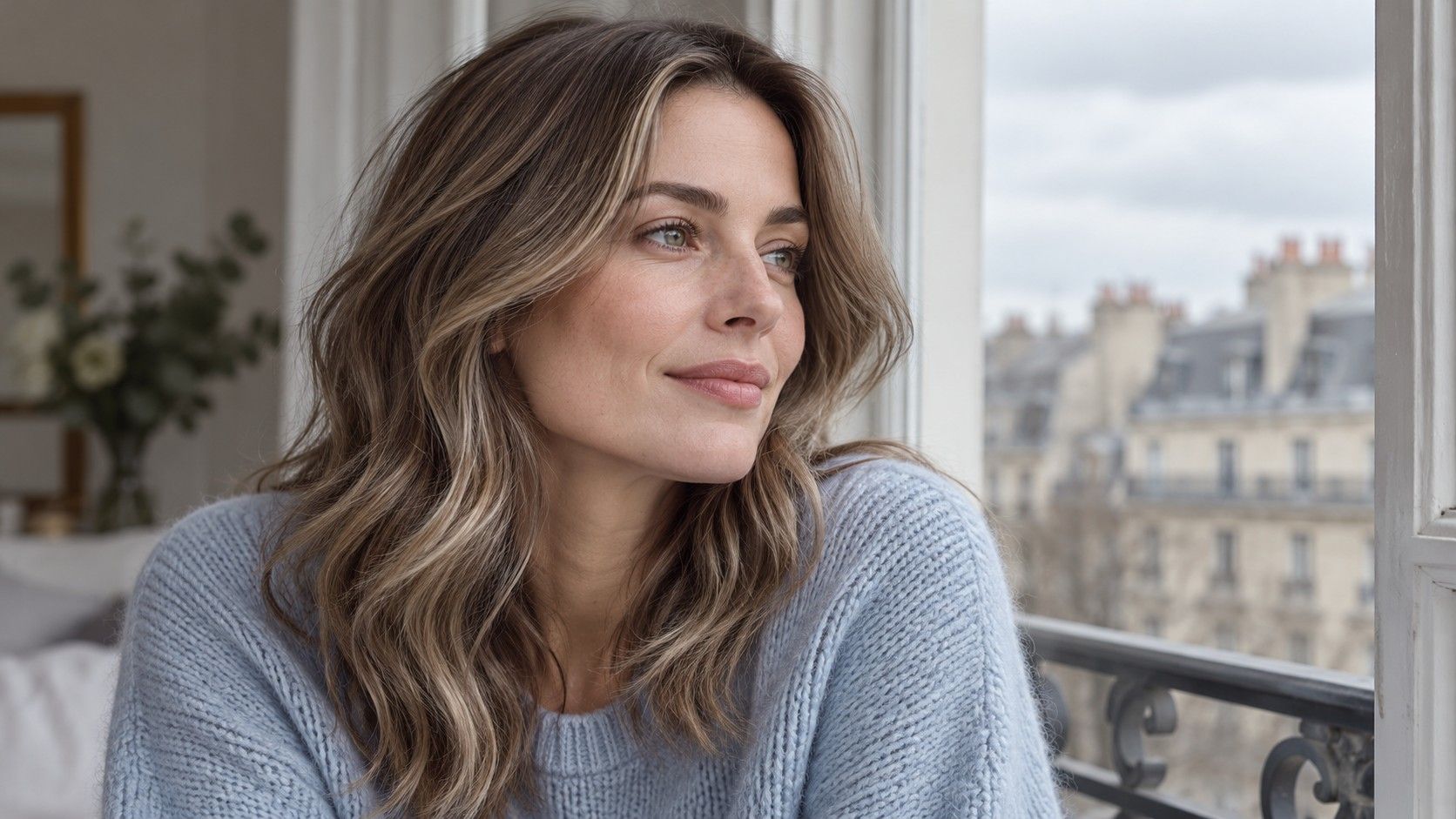
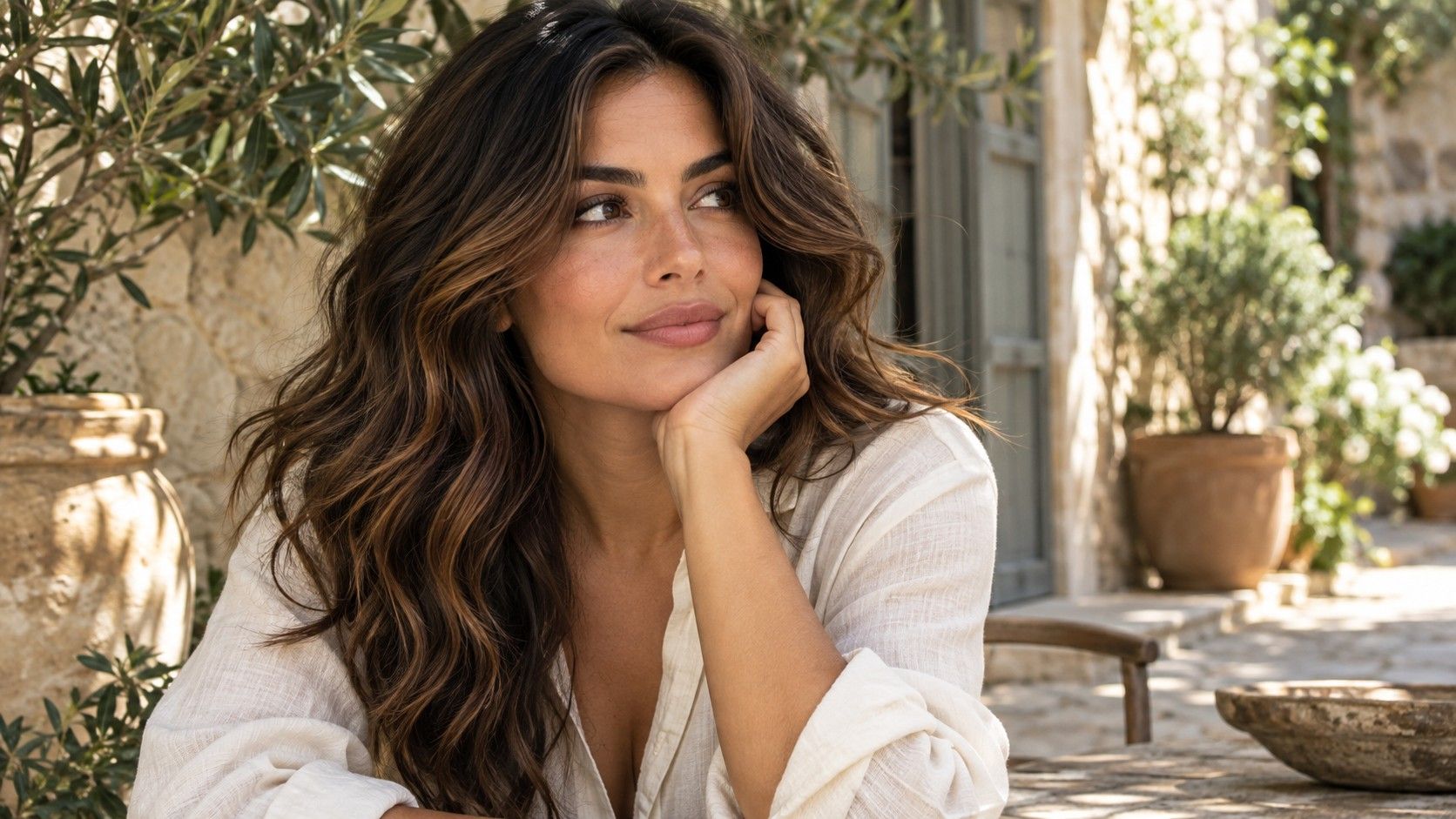
Brunette names can hide large differences. One photograph described as chocolate may be nearly black, another red-brown, and another medium brown with golden ribbons. Look past the name. Decide first whether you want the brown close to your natural depth, distinctly lighter, or darker and more defined. Then describe the visible tone: golden, red-leaning, muted or relatively neutral.
For a warmer direction, compare golden brown with chestnut. The golden version may read as softer brightness; chestnut may show more red, depending on the reference. If your skin already looks strongly golden in a picture, a very warm brown can either create the harmony you want or make the whole image feel too yellow. That is a preference to test, rather than a universal mistake.
For a cooler direction, compare a muted medium brown with a deeper espresso. Do not assume “ash” automatically means flattering for olive skin. A strongly gray-looking brown can feel subdued or flat to some people, while others like its restraint. Espresso changes the contrast as well as the tone, so assess it against another dark reference before deciding that coolness is the reason you prefer it.
Describe your favorite in a full sentence: “I like this medium brown because it has less red than my current ends, but I want some light variation.” That gives the shade a purpose. Keep a second picture showing what feels too orange, too gray or too dark. Those comparisons are more useful than asking for the best hair color for olive skin tone as though one brown could answer for everyone.
When blonde appeals, compare the root and the face frame
Olive skin does not rule out blonde. The practical question is which blonde effect you like and how it relates to your starting hair. Compare a beige blonde, a golden blonde and a cooler pale blonde without changing the hairstyle in every reference. Some people prefer the warmth of gold beside their skin; others like a more neutral or cooler contrast. A single skin label cannot make that choice for you.
Pay attention to the root. A blonde reference may look soft because a deeper root remains visible and only the lengths are very light. Cropping the picture to its brightest ends conceals that structure. Look for where the light pieces begin, how much darkness remains near the temples and whether the color close to the cheeks is warmer or cooler than the rest.
A small amount of brightness around the face and a pale all-over result are distinct choices. If the lightest version makes you feel visually overwhelmed, compare a darker blonde or a light brown with lighter pieces. If the pale version is exactly the statement you want, keep it on the shortlist without inventing a rule about needing more contrast. Decide whether the result feels like your style before discussing how realistic it is for your hair.
When copper looks exciting in a photo and uncertain on you
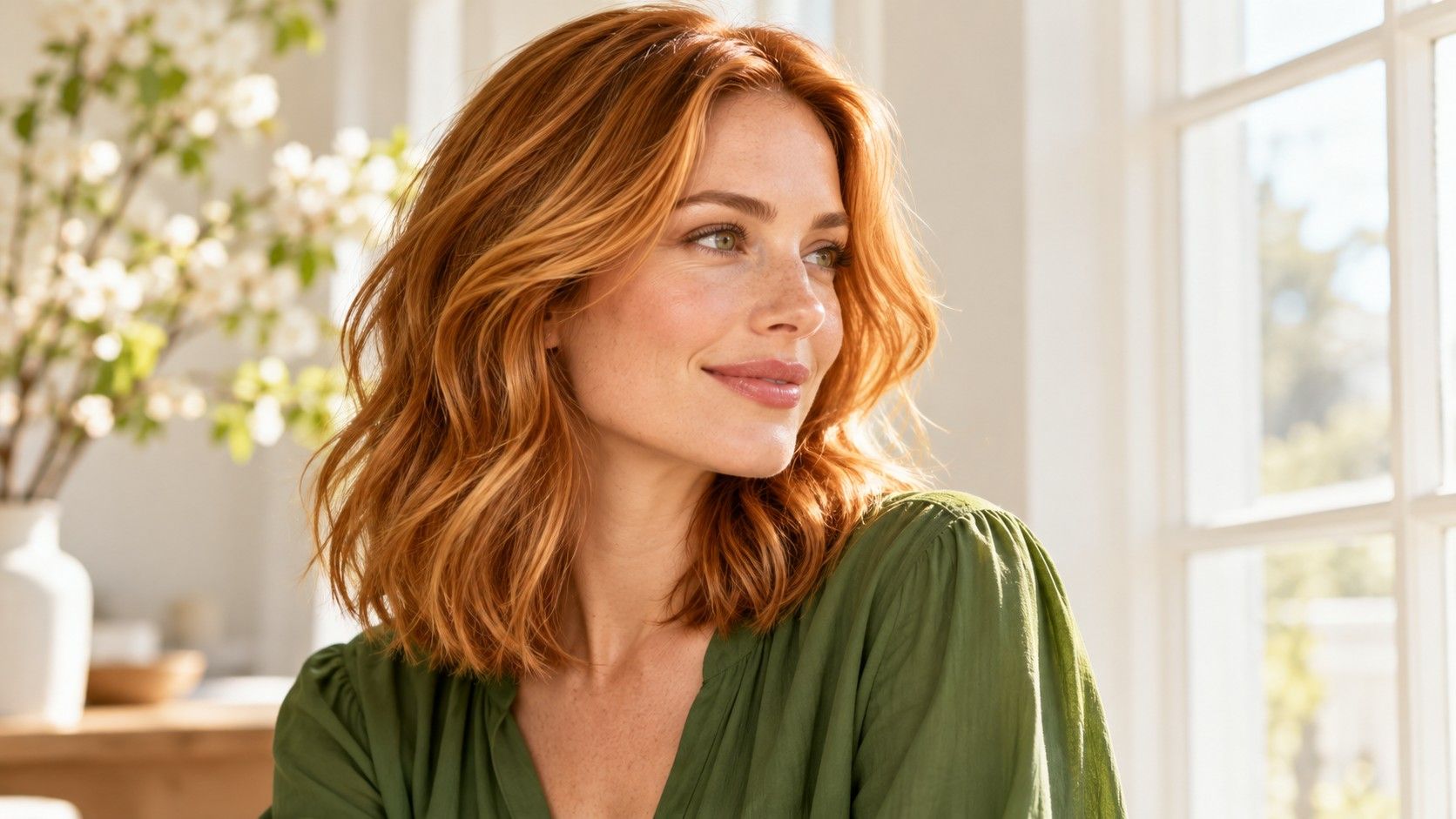
Copper covers a wide range, from a quiet brown with a reddish glow to bright orange-red. Before dismissing the family or committing to its boldest member, choose two examples at a similar depth. Compare a muted copper-brown with a clearer copper. Then decide whether you are attracted to the warmth, the saturation or both.
The common claim that olive skin must avoid red is too broad to help. Warm copper can create a striking difference from an olive complexion, and you may like that visible contrast. A red-brown can offer a smaller change. If a reference makes your skin seem greener than you enjoy, try a less saturated version or a different depth before concluding that all reds produce the same effect.
Keep your everyday clothes in the comparison. A copper shade beside a cream sweater can feel different from the same shade beside a bright pink collar or black glasses. You do not have to rebuild a wardrobe to match your hair, but it helps to know whether your favorite reference depends on styling you rarely wear. The same applies to makeup: compare the idea with your usual routine, not just with a highly finished editorial face.
A name such as auburn is useful only when accompanied by an image or a clear description. Some people mean a dark brown with red undertones; others mean a distinctly red shade. Write down which part attracts you, including how bright you want it to look in daylight. That prevents a quieter copper-brown request from becoming an accidental request for vivid orange.
When you want softer contrast, including with gray hair
Age does not introduce a new undertone rule. The search for the best hair color for olive skin over 50 often points to a more specific concern: visible regrowth, changing proportions of gray, a wish for softer contrast, or simply a new style. Name that concern directly. There is no reason to abandon a dark or vivid color if you enjoy it, and no requirement to hide gray.
If the dark outline around your face feels stronger than you now want, compare a medium brown with the deeper shade you normally choose. Keep the tone similar for the first comparison. You may discover that reducing the depth slightly achieves the effect you wanted without needing a completely different color family. Alternatively, a softer arrangement around the hairline may appeal more than an all-over lighter shade.
If retaining gray is part of the plan, look for references with a similar distribution rather than assuming silver is one uniform color. A pale streak at the front, scattered gray and a mostly silver head create different patterns. Include your natural dark strands in the decision. Decide whether you want their contrast emphasized, softened or simply allowed to grow, then ask how the proposed color would work with that aim.
Avoid choosing a shade because someone calls it youthful. More useful criteria are whether you enjoy the face frame, whether the finish works with your usual cut and whether the upkeep feels acceptable. These apply at any age and leave room for a deliberate dramatic result.
When two shades both work, use everyday preferences to decide
You may finish with two plausible directions: a neutral dark brown and a warmer medium brown, for example. Compare what each would change in your daily appearance. One may feel sharp with dark glasses and a simple outfit; the other may give the softer impression you wanted on days without makeup. Neither has to defeat the other on an undertone score.
Look at your roots and lengths separately before choosing. Previous dye, highlights and uneven starting color matter to the practical discussion even when both references appeal equally. Ask what regrowth would look like, which parts of the image are realistic for your hair and how the appearance may evolve between visits. Get an individual estimate rather than assuming all brunette or blonde choices require similar upkeep.
Keep a reason beside each reference. “Neutral brown, near my present depth, with less red” is a preference you can explain and adapt to your actual hair.